



Not medical advice — written by Ngoc Vietsmall, who is not a healthcare professional.
This article summarises publicly available medical information for general readers. It cannot account for your history, medication or symptoms, and it is not a diagnosis or a treatment plan. Any dose mentioned comes from published labelling or guidelines — only your own prescriber can decide what is right for you.
Always speak to a doctor or pharmacist before starting, stopping or changing any treatment. If symptoms are severe or getting worse, seek urgent care. Full disclaimer · How this is written
People with Lynch syndrome should start colonoscopy at age2025 and repeat it every 12years. This aggressive schedule cuts the risk of colorectal cancer by more than 60% compared with waiting until the usual 45yearold start.
If you already know you carry a mismatchrepair gene mutation, the next step is simple: confirm the diagnosis with genetic testing, then sit down with a gastroenterology specialist to map out a personal surveillance calendar. Lets walk through what the latest guidelines say, why they matter, and how to turn them into a plan that fits your life.
Why Screening Matters
What makes Lynch syndrome different?
Lynch syndrome isnt just another familyhistory flag. Its a hereditary condition where the bodys DNArepair genes (MLH1, MSH2, MSH6, PMS2, EPCAM) are broken, letting tiny errors turn into fullblown cancers. The statistics are sobering but empowering:
- Lifetime colorectal cancer risk ranges from 40% to 80%far higher than the 45% seen in the general population.
- When cancer does appear, it often shows up in the right (proximal) colon, where flexible sigmoidoscopy can miss it.
- Earlystage detection through regular colonoscopy improves fiveyear survival to over 90%.
A realworld snapshot
Take Maria, a 34yearold who learned she carried an MSH2 mutation after her fathers diagnosis. She had her first colonoscopy at 24, found a tiny 4mm adenoma, and now follows a 12month surveillance rhythm. Last year, a routine exam caught a precancerous lesion before it could grow. Marias story is a reminder that once you know, you can act really does save lives.
Guideline Summary Table
Quicklook recommendations
Below is the core of the current guidance, distilled into a concise table. It pulls from the NCCN guidelines, the American Gastroenterological Association (AGA), and the U.S. Preventive Services Task Force (USPSTF). All recommend colonoscopy as the goldstandard test for Lynchsyndrome carriers.
| Organization | Start Age | Interval | Notes |
|---|---|---|---|
| NCCN | 2025yr (or 25yr before the youngest case in family) | Every 12yr | Annual if polyps found; continue until healthstatus precludes |
| AGA | 2025yr | Every 12yr | Same as NCCN; emphasizes highdefinition colonoscopy |
| USPSTF | Based on family history risk tier | Every 12yr for highrisk | Recommends referral to genetics for confirmation |
How the numbers translate for you
If youre 28 and just got the genetic report, youre right on schedule to book that first colonoscopy within the next year. If youre already 35 and still havent started, its not too lateyour specialist will likely suggest beginning now and keeping the 12year rhythm.
Age Specific Questions
Colonoscopy age 35?
Many people wonder whether waiting until 35 is safe. For averagerisk screening, yes, but for Lynch syndrome the disease can strike a decade earlier. Starting at 35 would miss a window where small polyps could be removed before they become dangerous. If youre 35 and newly diagnosed, plan a colonoscopy soon and then stick to the 12year cadence.
What age should a woman get a colonoscopy?
The recommendation is the same for men and womenstart at 2025 if you carry a pathogenic variant. Women, however, also face higher risks for endometrial and ovarian cancers, so a coordinated approach with your gynecologist is wise. Some clinics bundle a pelvic exam with the colonoscopy appointment to streamline care.
How often colonoscopy after 70?
Age alone isnt the deciding factor after 70. The guidelines say to continue surveillance as long as youre in good health and the benefits outweigh the procedural risks. If youve had no polyps and remain generally healthy, many physicians keep the 2year interval; if youve had polyps, an annual exam may still be recommended.
Decisiontree for age & health
Imagine a simple flowchart:
- Are you 2025? Start colonoscopy now.
- Are you 35+ and havent started? Schedule ASAP.
- Over 70 with good health? Continue 12yr schedule.
- Over 70 with comorbidities? Discuss risk/benefit with doctor.
After Polyps Found
How often after polyps?
If the pathology report shows an advanced adenoma (10mm, villous features, or highgrade dysplasia), the standard is a repeat colonoscopy in 1year. For smaller, lowrisk adenomas, you can revert to the 12year interval. The key is that every polyp discovery nudges the schedule a bit tighterbecause Lynch syndrome makes new growths more likely.
Types of polyps & risk
Not all polyps are created equal:
- Hyperplastic polyps usually harmless, especially in the rectum.
- Traditional adenomas the ones we watch closely; size and histology matter.
- Serrated lesions can be tricky; in Lynch carriers they behave more like adenomas.
Sample pathology report (what to look for)
Below is a mock report excerpt you might receive:
Specimen: 3 polyps, 4mm, 7mm, 12mm
Histology: Tubular adenoma with lowgrade dysplasia (4mm)
 Tubulovillous adenoma, highgrade dysplasia (12mm)
Recommendations: Repeat colonoscopy in 1year
Notice how the larger, highgrade lesion dictates the followup timing.
Genetic Testing Integration
When to test family members
Firstdegree relatives (parents, siblings, children) should be offered testing as early as 1821years, according to the American Cancer Society. Early identification lets them start surveillance before any cancer can take hold.
NCCNs testing algorithm
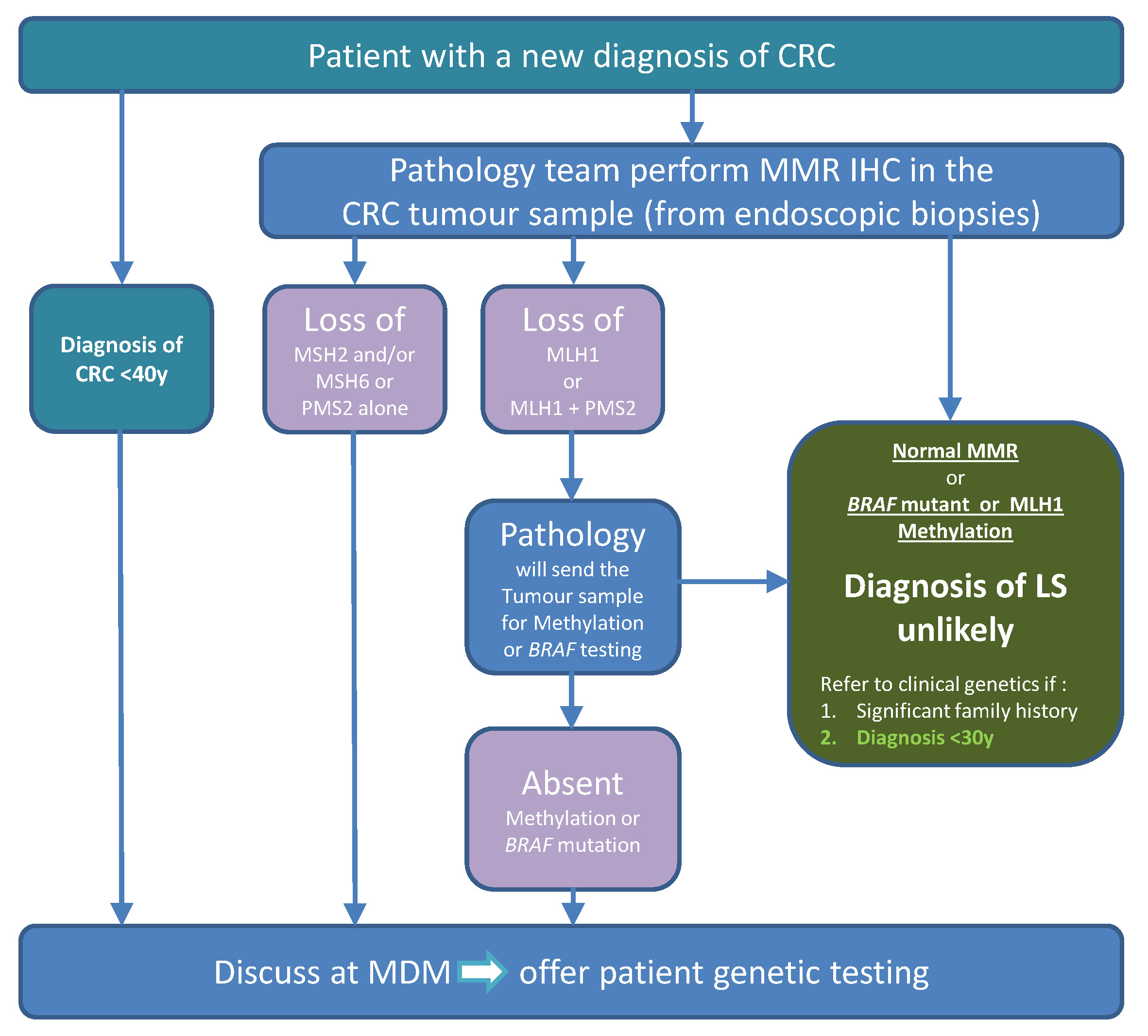
The NCCN flowchart starts with a tumor that shows microsatellite instability (MSIH) or loss of mismatchrepair protein expression on immunohistochemistry. If thats positive, germline testing for MLH1, MSH2, MSH6, PMS2, and EPCAM follows. A negative result still warrants a discussion about clinical risk based on family history.
Familyhistory checklist (downloadable)
Print a simple table and fill in each relatives cancer type and age at diagnosis. This helps your genetic counselor see patterns at a glance:
| Relative | Cancer Type | Age at Diagnosis | Genetic Test Done? |
|---|---|---|---|
| Mother | Colon | 48 | Yes |
| Brother | Endometrial | 45 | No |
Benefits vs Risks
Benefits you can count on
Regular colonoscopy isnt just a precautionits a proven lifesaving tool. Studies show that for Lynch carriers, intensive surveillance can prevent up to 70% of colorectal deaths. It also catches other lesions (like sessile serrated polyps) that would otherwise be missed.
Potential risks and how to mitigate them
- Perforation Rare (<0.1%); risk drops with experienced endoscopists.
- Bleeding Usually minor; most resolve without intervention.
- Sedation reactions Discuss allergies and meds with the team ahead of time.
- Emotional anxiety Bring a friend, listen to a calming playlist, or practice breathing exercises.
Simple riskbenefit calculator
Grab a spreadsheet, input your age, number of polyps, and family history; the sheet will suggest an interval based on published data. Many healthcare portals already embed this tool, or you can ask your doctor to walk you through it.
Build Your Personal Surveillance Plan
Stepbystep checklist
- Confirm the genetic result. Keep a copy of the lab report.
- Schedule the first colonoscopy. Use a reminder app to book it within the next 12months.
- Set a followup cadence. Mark the next appointment 12years later, unless polyps change the plan.
- Coordinate with other specialists. If youre a woman, add an annual gynecologic exam.
- Update your familyhistory sheet. Share it with relatives and your genetic counselor.
Common barriers & hacks
Insurance denials, travel distance, and fear of the procedure are real hurdles. Heres whats helped others:
- Ask your insurer for a preauthorization using the term highrisk surveillance its usually covered.
- Seek a mobile endoscopy unit if you live far from a tertiary center.
- Bring a trusted friend or family member to the appointment for moral support.
Sample email to your gastroenterology office
Subject: Scheduling Initial LynchSyndrome Surveillance Colonoscopy
Dear Dr. [Name],
I have a confirmed pathogenic variant in the MSH2 gene (date of diagnosis: [date]). Following NCCN recommendations, I would like to schedule my first colonoscopy at the earliest convenient time and discuss a 12year surveillance interval.
Please let me know available slots and any preprocedure instructions.
Thank you,
[Your Name]
Quick Answers (SnippetReady)
What are the new guidelines for colonoscopy?
Start at age2025, repeat every 12years, and adjust to annual if advanced polyps appear.
How often colonoscopy after 70?
Continue as long as youre in good health; typical interval remains 12years, but a doctor may personalize it.
Is flexible sigmoidoscopy enough?
NoLynchrelated cancers often arise in the right colon, which sigmoidoscopy cannot reach.
Can I skip colonoscopy if I had a normal test at 30?
Not with Lynch syndrome. Even a clean exam at 30 doesnt eliminate the risk of new lesions developing within the next year.
Conclusion
In a nutshell, Lynch syndrome demands an early start (2025years), frequent checks (every 12years), and a lifelong commitment to colonoscopy while youre able. Pair that with genetic testing for family members, a clear followup plan, and open conversations with your healthcare team, and you dramatically lower your cancer risk.
Take this moment to reach out to a genetics counselor, book that first appointment, and maybe even download the familyhistory checklist. A few proactive steps today can keep you cancerfree for years to come. If you have questions or want to share how youre navigating surveillance, feel free to reach outtogether we can turn knowledge into confidence.








